
Last Updated on December 31, 2025 by Luxor Content Team
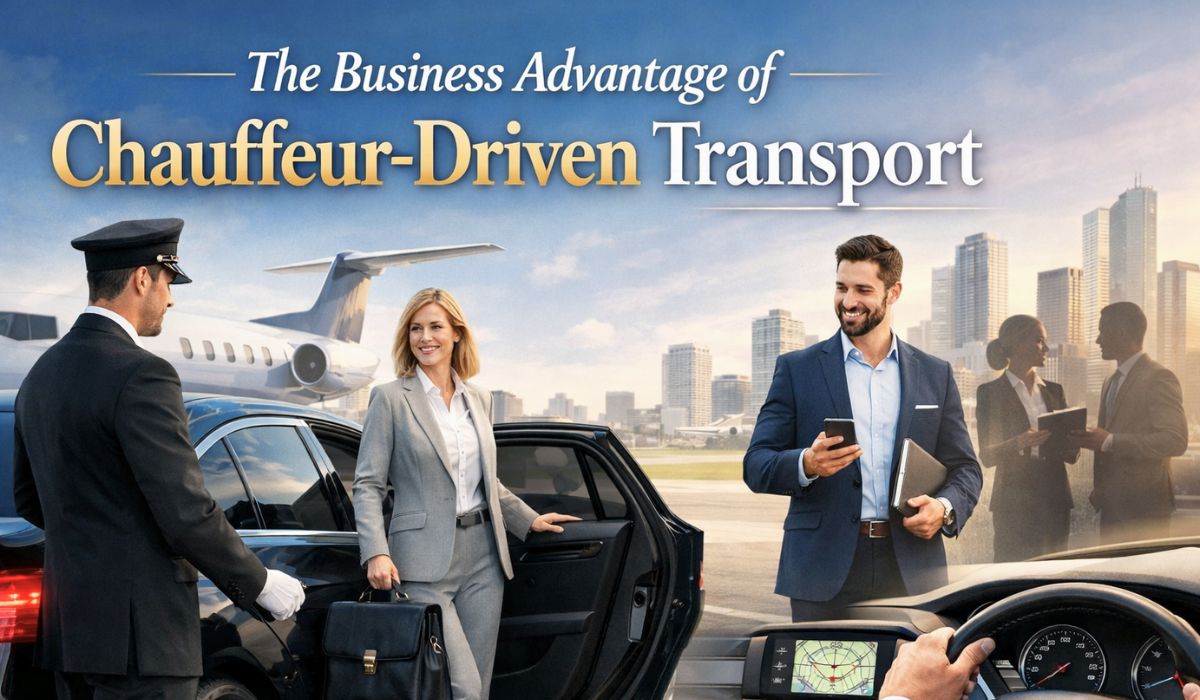
In a competitive business environment, success is often defined by how well an organisation manages time, people, and perception. While strategy and execution dominate most leadership discussions, one operational area frequently overlooked is transport. For companies operating at a senior or executive level, chauffeur-driven transport delivers tangible business advantages that go far beyond comfort. It supports productivity, protects leadership focus, reinforces professional image, and reduces risk across daily operations. When viewed through a business lens, chauffeur-driven transport becomes a strategic tool rather than a discretionary expense.
Transport as a Strategic Business Function
Business travel is not the same as personal commuting. When executives, directors, or senior managers travel, delays can disrupt meetings, weaken client confidence, and affect internal coordination. Transport therefore becomes part of the operational backbone of the organisation. Chauffeur-driven transport introduces structure into this function by replacing improvisation with planning. Pickups are scheduled, routes are anticipated, and responsibility is clearly defined.
This structured approach reduces variability, which is critical in business operations. When leadership can rely on transport functioning consistently, other parts of the business operate more smoothly. This is why many organisations integrate Corporate Chauffeur Services in Melbourne into their executive workflows rather than treating transport as an afterthought.
Protecting Executive Time and Daily Schedules
Time is one of the most valuable resources in business, particularly for senior leaders whose calendars are filled with high-impact meetings and decisions. Unreliable transport erodes this resource through delays, rushed transitions, and constant mental recalculation of arrival times. Chauffeur-driven transport protects executive time by creating predictable movement between locations.
Instead of building excessive buffers or reacting to traffic conditions, leaders can rely on planned departures and conservative scheduling. This stability keeps daily agendas intact and prevents one delay from cascading across the entire day. Over time, schedule protection translates into higher productivity and less operational friction, especially for leaders with packed itineraries.
Improving Productivity During Travel Time
For executives and senior managers, travel time is rarely idle. It is often used to prepare for meetings, review documents, make calls, or mentally transition between responsibilities. Chauffeur-driven transport enables this productivity by providing a private, controlled environment where work can continue uninterrupted.
When leaders are not focused on driving, navigation, or parking, they reclaim cognitive bandwidth. This allows them to arrive better prepared and more focused. Many organisations recognise this advantage and rely on Chauffeur Services for Business Travel to turn unavoidable travel time into productive working time.
Reducing Stress and Supporting Better Decision-Making
Stress has a direct impact on leadership performance. Rushed arrivals, traffic frustration, and transport uncertainty increase cognitive load and emotional tension. These effects often carry into meetings, negotiations, and presentations where clarity and composure are essential.
Chauffeur-driven transport reduces this stress by removing uncertainty from travel. Leaders know when they will be picked up, how long the journey will take, and what to expect upon arrival. This predictability supports calmer decision-making and improves overall leadership presence. Over time, reduced travel stress contributes to more consistent executive performance, particularly in high-pressure roles.
Reinforcing Professional Image and Brand Perception
How leaders arrive matters. Clients, partners, and stakeholders form impressions not only based on what is said in meetings but also on punctuality, preparedness, and overall professionalism. Chauffeur-driven transport reinforces a polished, organised image by ensuring leaders arrive calm, on time, and composed.
This is especially important for client-facing roles, airport pickups, and high-level engagements. A seamless transport experience reflects positively on the organisation as a whole. For many businesses, this professional consistency becomes part of their brand identity and supports long-term relationship building.
Confidentiality and Executive Discretion
Senior leaders routinely handle sensitive information, including financial data, legal matters, strategic plans, and personnel decisions. Travel time is often used for confidential calls or discussions. Chauffeur-driven transport provides a private environment that supports discretion and information security.
Unlike shared or casual transport options, professional chauffeur services operate with clear expectations around confidentiality. This allows executives to communicate freely without concern about being overheard or compromised. These considerations align closely with the principles outlined in Professional Transport Solutions for Senior Management, where privacy and discretion are essential operational requirements.
Reliability and Accountability in Business Travel
Reliability is not a preference in business—it is a requirement. Missed meetings, late arrivals, and disrupted schedules damage credibility and reduce trust. Chauffeur-driven transport introduces accountability into travel by assigning responsibility for punctuality and service delivery to a professional provider.
This accountability is particularly valuable during peak traffic periods, early-morning departures, late-night returns, or complex multi-stop itineraries. When transport reliability is managed professionally, leaders can focus on their responsibilities rather than contingency planning.
Supporting Complex and High-Density Travel Days
Business travel is rarely simple. Executives often move between offices, meetings, site visits, events, and airports within a single day. Each transition introduces the potential for delays and disruption. Chauffeur-driven transport absorbs this complexity by maintaining continuity throughout the day.
With a consistent vehicle and driver, leaders experience fewer interruptions and maintain momentum between engagements. This continuity reduces fatigue and preserves focus, making demanding schedules more sustainable. It also eliminates the inefficiency of repeatedly coordinating new transport throughout the day.
Duty of Care and Organisational Risk Management
Organisations have a responsibility to protect their people, particularly those in senior roles. Travel outside standard hours, unfamiliar locations, and high-pressure situations introduce safety considerations. Chauffeur-driven transport supports duty of care through experienced drivers, maintained vehicles, and structured service standards.
This reduces exposure to risk while simplifying compliance with organisational policies. From a governance perspective, professional transport aligns with broader risk management strategies and reinforces the organisation’s commitment to employee wellbeing.
Cost Efficiency Through Predictability and Performance
While chauffeur-driven transport may appear more expensive on a per-trip basis, its true value lies in cost predictability and performance protection. Unreliable transport often creates hidden costs through lost productivity, damaged relationships, and leadership fatigue.
Professional transport stabilises these variables. Predictable pricing simplifies budgeting, while consistent service reduces indirect losses associated with delays and stress. When evaluated holistically, chauffeur-driven transport often delivers better long-term efficiency than reactive alternatives.
Why Businesses Choose Chauffeur-Driven Transport Long-Term
Once organisations experience the operational stability provided by chauffeur-driven transport, reverting to casual options becomes difficult. The benefits compound over time: schedules remain intact, leaders perform more consistently, client experiences improve, and internal coordination becomes easier.
These outcomes explain why leadership teams consistently align with insights found in Why Executives Prefer Chauffeur-Driven Travel where transport is framed as a support system for performance rather than a luxury.
Conclusion
The business advantage of chauffeur-driven transport lies in its ability to remove friction from high-impact work. It protects time, supports productivity, reinforces professional image, safeguards confidentiality, and reduces risk. For organisations that depend on senior leadership effectiveness and strong client relationships, these benefits are not optional.
In Melbourne’s demanding corporate environment, where expectations are high and schedules are unforgiving, chauffeur-driven transport provides a practical, repeatable advantage. It allows businesses to operate with greater confidence, consistency, and professionalism—qualities that ultimately translate into better outcomes.