
Last Updated on January 13, 2026 by Luxor Content Team
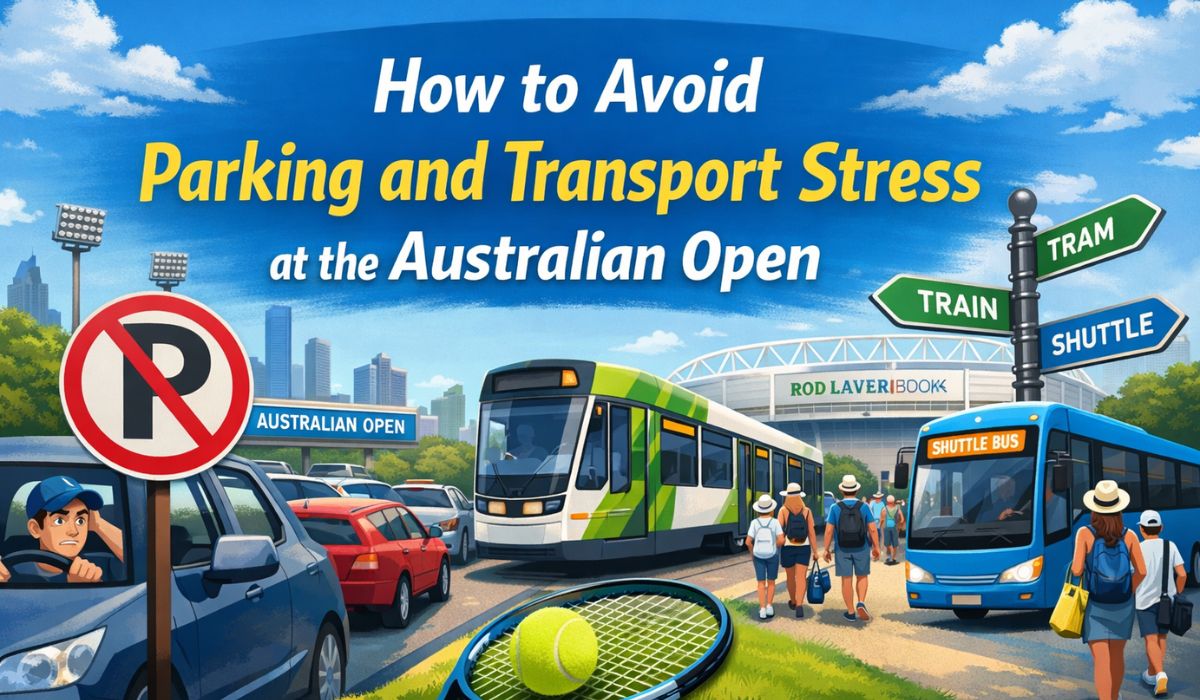
The best way to avoid parking and transport stress at the Australian Open is to plan your travel well in advance, understand how the tournament affects Melbourne’s traffic systems, and choose transport options that remove uncertainty rather than add to it. Each year, thousands of visitors underestimate how dramatically the Australian Open changes the way Melbourne moves. Roads become congested hours before matches, parking availability shrinks rapidly, and public transport operates under constant pressure. Visitors who rely on last-minute decisions often find that transport becomes the most frustrating part of an otherwise world-class event.
This guide explains why transport stress happens during the Australian Open, what mistakes most visitors make, and how to avoid parking chaos, long delays, and post-match travel problems—whether you are attending one match or multiple sessions.
Why Parking and Transport Become a Major Problem During the Australian Open
The Australian Open is not just a sporting event; it is a city-wide logistical challenge. Over the course of the tournament, Melbourne Park attracts hundreds of thousands of spectators, many of whom arrive and leave at the same times. Evening sessions, semifinals, and finals are particularly demanding on the city’s transport infrastructure.
Temporary road closures, pedestrian-only zones, redirected traffic, and increased public transport usage all combine to create conditions that are very different from normal travel days. Visitors unfamiliar with Melbourne often assume they can drive and park nearby or “figure it out” on the day, which is where stress begins.
Common Transport Mistakes That Cause Stress
One of the most effective ways to avoid transport stress is to understand what not to do. Many visitors repeat the same mistakes every year.
A common error is assuming that parking will be available near Melbourne Park if you arrive early. In reality, many parking areas fill before midday, especially on weekends. Another mistake is relying entirely on ride-sharing apps without accounting for surge pricing, long wait times, and relocated pick-up zones. Some visitors also underestimate how crowded public transport becomes after night matches, leading to long waits and uncomfortable journeys.
Avoiding stress starts with realistic expectations.
Understanding Parking Limitations Around Melbourne Park
Parking near Melbourne Park is extremely limited during the Australian Open. On-site parking options are scarce, tightly controlled, and often reserved well in advance. Surrounding streets experience heavy restrictions, and enforcement is strict throughout the tournament.
Even when off-site parking is available, it often requires long walks to the venue. After matches, exiting parking zones can take significant time due to traffic congestion and pedestrian flow. For visitors attending evening sessions, this can mean sitting in traffic long after the match has ended.
Parking is not just inconvenient—it is unpredictable.
Why Driving Feels Stressful During the Tournament
Driving in Melbourne during the Australian Open feels stressful because the city operates under altered conditions. Navigation apps may not account accurately for temporary closures or crowd-related delays. What looks like a short drive can easily turn into a slow, stop-start journey.
Drivers must also deal with heightened pedestrian activity, event traffic controllers, and unfamiliar detours. For visitors already tired from a long match day, this added mental load significantly reduces enjoyment.
Public Transport: Convenient but Overwhelmed
Public transport is widely promoted as the preferred option during the Australian Open, and it can work well under certain conditions. However, its limitations are often overlooked.
Trains, trams, and buses operate at peak capacity throughout the tournament. During high-demand sessions, passengers frequently stand for extended periods, navigate crowded platforms, and experience slower departures after matches. For families, older guests, or those attending multiple sessions, this can be physically exhausting.
Public transport is efficient, but not always comfortable or predictable during major events.
Why Transport Stress Is Worse After Night Matches
Night matches create a unique transport challenge. When matches finish late, thousands of spectators attempt to leave Melbourne Park at the same time. Public transport platforms fill quickly, ride-sharing demand spikes, and road congestion increases.
Visitors often underestimate how long it will take to get home after an evening session. Waiting in crowded stations or standing in queues late at night contributes heavily to transport stress.
Planning return travel is just as important as planning arrival.
How Early Planning Reduces Transport Anxiety
The single most effective way to reduce parking and transport stress is early planning. Knowing exactly how you will get to Melbourne Park and how you will return eliminates uncertainty.
Early planning allows visitors to:
-
Avoid peak congestion times
-
Choose reliable transport options
-
Build time buffers into their schedule
-
Reduce decision-making on match days
When transport is planned in advance, the Australian Open experience becomes smoother and more enjoyable.
Why Many Visitors Avoid Parking Entirely
Experienced Australian Open attendees often avoid parking altogether. Rather than dealing with congestion, enforcement, and long exits, they choose transport options that eliminate parking from the equation.
Removing parking from your plan removes one of the largest sources of stress associated with the event. This is why many visitors explore alternatives that offer door-to-door convenience.
The Role of Private Transport in Reducing Stress
Private transport plays a significant role in reducing stress during large-scale events. Unlike shared systems, private transport is pre-arranged, flexible, and tailored to individual schedules.
A professional Australian Open chauffeur service removes the need to search for parking, wait for public transport, or manage unpredictable ride-sharing availability. Chauffeurs plan routes based on real-time traffic conditions and event schedules, ensuring smoother access to the venue.
How Chauffeur Services Avoid Common Transport Problems
Chauffeur services avoid transport stress by addressing the exact problems that cause it. Vehicles are dispatched with knowledge of road closures and congestion zones. Drop-off and pick-up points are planned to minimize walking distance and delays.
Unlike ride-sharing, chauffeur services do not rely on availability at peak times. Unlike driving, they eliminate parking entirely. Unlike public transport, they offer privacy, comfort, and flexibility.
This combination makes them particularly effective during the Australian Open.
Comfort and Stress Are Closely Connected
Transport stress is not only about delays—it is also about physical and mental fatigue. Standing in crowded trains, walking long distances in summer heat, and waiting in queues all contribute to exhaustion.
Comfortable transport reduces stress by allowing visitors to relax before matches and unwind afterward. Climate-controlled vehicles, seating, and a calm environment make a noticeable difference, especially for those attending multiple sessions.
This is one reason luxury event transport in Melbourne is increasingly chosen during the tournament.
Transport Planning for Families and Groups
Families and groups face additional transport challenges. Coordinating multiple people, managing children, and ensuring everyone arrives together can be difficult using public transport or multiple ride-share vehicles.
Group transport reduces complexity by keeping everyone together and eliminating the need for coordination across different systems. This simplifies arrival and departure and reduces stress for all members of the group.
Transport Considerations for International Visitors
International visitors often experience higher transport stress due to unfamiliarity with local systems. Understanding ticketing, navigating stations, and dealing with unexpected delays can be overwhelming.
Pre-planned transport removes these variables, allowing visitors to focus on enjoying the event rather than managing logistics in an unfamiliar city.
Timing Your Arrival to Minimize Stress
Arriving too close to match start times increases stress significantly. Security checks, walking distances, and crowd density all take time.
Allowing a generous buffer before matches reduces pressure and provides flexibility if delays occur. This is especially important during high-profile sessions and finals.
Managing Return Travel After Matches
Many visitors focus on getting to Melbourne Park but forget to plan how they will get home. Return travel is often more stressful, particularly after night matches.
Knowing exactly when and how you will leave the venue eliminates uncertainty and avoids late-night frustration. Pre-arranged transport is particularly effective for this reason.
Weather and Its Impact on Transport Stress
January weather can intensify transport stress. Heat makes crowded transport uncomfortable and increases fatigue. Sudden weather changes can disrupt schedules and slow travel.
Choosing transport options that minimize exposure to heat and walking distances improves comfort and reduces stress during hot days.
Budgeting and Transport Stress
Unexpected transport costs contribute to stress. Surge pricing, parking fees, and last-minute bookings often cost more than planned.
Fixed or pre-arranged transport options help visitors budget accurately and avoid unpleasant surprises during the tournament.
Accessibility and Special Requirements
Visitors with mobility needs face additional challenges when parking is distant and public transport is crowded. Planning transport that minimizes walking and offers direct access is essential.
Private transport often provides greater flexibility for accessibility requirements, reducing both physical strain and stress.
Final Answer: How Do You Avoid Parking and Transport Stress at the Australian Open?
You avoid parking and transport stress at the Australian Open by planning early, avoiding driving where possible, and choosing transport options that eliminate uncertainty. Parking shortages, congestion, and crowded public systems are guaranteed during the tournament, but stress is not.
By removing parking from your plan, accounting for peak congestion, and using reliable transport solutions, you can focus on enjoying the tennis rather than managing logistics.
Plan Smart and Enjoy the Australian Open
The Australian Open is one of Melbourne’s most exciting events, but it demands thoughtful planning. Visitors who prepare their transport in advance consistently enjoy smoother arrivals, calmer departures, and a more positive overall experience.
Reducing transport stress transforms the Australian Open from a logistical challenge into the world-class event it is meant to be.