
Last Updated on December 31, 2025 by Luxor Content Team
In high-performance business environments, pressure is not an occasional challenge—it is a constant condition. Senior executives, directors, and decision-makers operate within compressed timelines, overlapping commitments, and expectations that leave little room for error. Meetings are tightly scheduled, responsibilities extend beyond standard working hours, and outcomes often depend on being present, focused, and composed at precisely the right moment. In such conditions, transportation becomes far more than a logistical necessity. It becomes a stabilising force that can either support performance or undermine it.
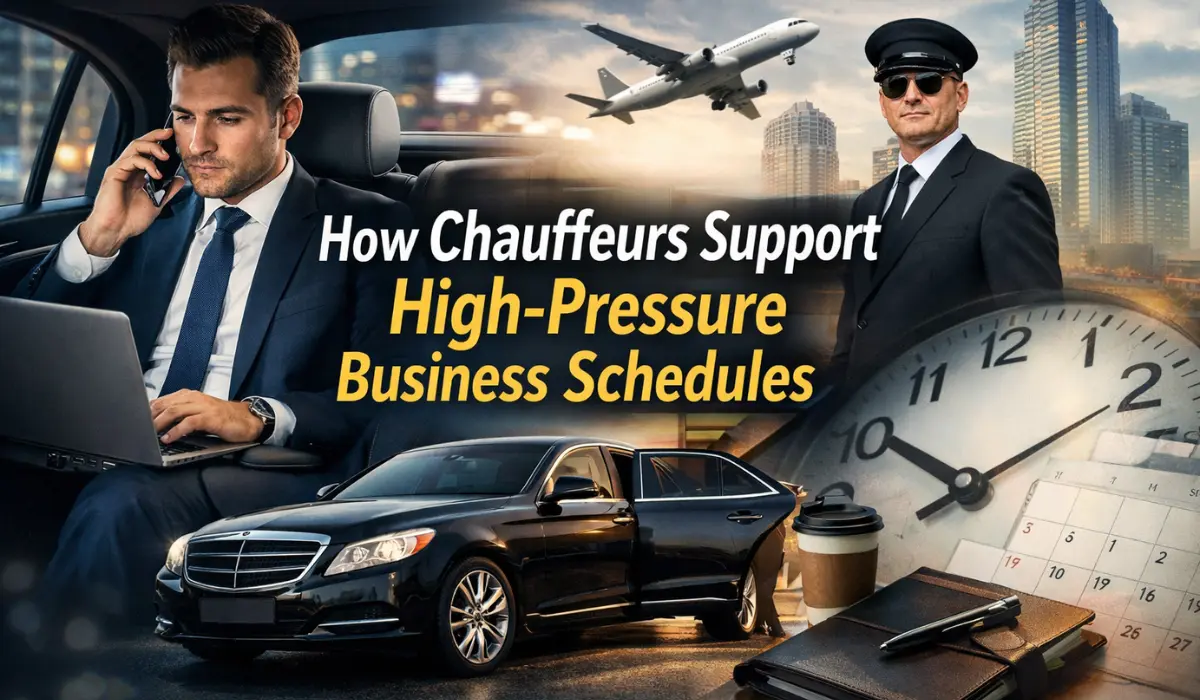
Chauffeur-driven transport plays a critical role in supporting high-pressure business schedules by removing uncertainty, reducing cognitive load, and ensuring leaders can move efficiently without distraction. Unlike ad-hoc transport options that require constant monitoring and adjustment, chauffeurs operate as part of the executive workflow. Their role is not merely to drive but to protect time, manage transitions, and maintain continuity throughout demanding business days.
The Reality of High-Pressure Executive Schedules
High-pressure business schedules are defined by intensity rather than volume. A single executive day may involve investor briefings, internal leadership meetings, client negotiations, site visits, and airport transfers, often with minimal buffer time between commitments. The margin for error is extremely small. A ten-minute delay can ripple across the entire day, causing missed meetings, rushed decisions, and unnecessary stress.
In this context, transport failures are not isolated inconveniences; they are operational disruptions. Executives cannot afford to react to traffic conditions, parking issues, or last-minute cancellations. Chauffeurs support these schedules by providing structure and predictability. Pickups are planned, routes are anticipated, and responsibility for execution is shifted away from the executive. This allows leaders to operate within demanding schedules without transport becoming an additional variable to manage.
Removing Decision Fatigue from Daily Movement
Decision fatigue is a real and measurable phenomenon, particularly for senior leaders who make high-stakes decisions continuously throughout the day. Each additional choice—when to leave, which route to take, where to park, how to recover lost time—adds to cognitive load and reduces mental clarity later in the day.
Chauffeurs reduce decision fatigue by eliminating these micro-decisions entirely. Executives no longer need to think about logistics between meetings. Movement becomes automatic, predictable, and managed. This preservation of mental energy supports better judgement, clearer communication, and more consistent leadership performance over long, demanding days.
This dynamic is a central reason organisations invest in Professional Transport Solutions for Senior Management, where transport is positioned as a support system for leadership effectiveness rather than a convenience.
Protecting Time in Compressed Schedules
Time protection is one of the most valuable contributions chauffeurs make to high-pressure business schedules. Executives often operate with no flexibility between meetings, meaning punctuality is non-negotiable. Chauffeurs support this requirement by arriving early, planning routes conservatively, and adapting in real time to changing conditions.
Unlike casual transport options, chauffeurs are accountable for delivering the schedule as planned. If traffic builds unexpectedly or a meeting overruns, adjustments are made proactively to minimise impact. This accountability allows executives to maintain momentum throughout the day without constantly checking the clock or recalculating arrival times.
Supporting Productivity Between Engagements
High-pressure schedules leave little room for downtime. For executives, travel time is often the only opportunity to prepare for upcoming meetings, review documents, or reset mentally between engagements. Chauffeurs enable this productivity by providing a quiet, private environment free from the distractions of driving.
This ability to work in transit is particularly valuable on days with back-to-back commitments. Executives can use travel time strategically rather than defensively. Over time, this reclaimed productivity significantly improves performance and reduces the feeling of constantly “catching up.”
This is why Chauffeur Services for Business Travel in Melbourne are commonly integrated into executive routines where travel time is treated as functional work time rather than lost hours.
Maintaining Composure Under Pressure
High-pressure schedules amplify stress. When leaders feel rushed or uncertain, that stress carries into meetings and interactions, affecting communication and decision-making. Chauffeurs help maintain composure by creating smooth transitions between engagements.
Knowing that transport is reliable allows executives to mentally disengage from logistics and focus on outcomes. Arriving calm rather than rushed improves presence, confidence, and credibility—qualities that are especially important during negotiations, presentations, and leadership discussions.
This composure is one of the defining reasons behind Why Executives Prefer Chauffeur-Driven Travel, where transport is understood as a performance enabler rather than a luxury.
Managing Multi-Stop and High-Density Travel Days
High-pressure business days often involve multiple locations with little margin between stops. Managing these days with ad-hoc transport introduces unnecessary risk, as each new booking creates potential delays and inconsistencies.
Chauffeurs support complex itineraries by providing continuity across the entire day. The same vehicle and driver manage all movements, allowing adjustments to be made smoothly without disrupting the overall schedule. Executives remain oriented and focused, rather than repeatedly resetting between journeys.
This continuity is particularly valuable when meetings overrun or priorities shift, as chauffeurs can adapt without requiring the executive to intervene.
Reducing Stress During Airport Transfers and Tight Timelines
Airport travel is a major pressure point for business schedules. Flights operate on fixed timelines, and delays can derail entire days or trips. Chauffeurs support high-pressure airport travel by building buffers, monitoring conditions, and ensuring timely arrivals.
For executives with early flights, late arrivals, or tight connections, this reliability is critical. Chauffeurs remove the risk of missed flights caused by transport issues, allowing leaders to focus on the business purpose of the trip rather than the mechanics of getting there.
This airport reliability complements broader corporate travel strategies and integrates seamlessly with Corporate Chauffeur Services in Melbourne.
Discretion and Confidentiality During Demanding Days
High-pressure schedules often involve sensitive conversations, urgent calls, and confidential discussions. Executives need environments where they can communicate freely without concern for privacy.
Chauffeurs support this requirement by providing private, professional environments where discretion is expected. This allows leaders to address urgent matters during transit rather than postponing decisions. In fast-moving business contexts, this responsiveness can be a competitive advantage.
Supporting Leadership Presence and Professional Image
When schedules are demanding, how an executive arrives matters as much as when. Chauffeurs help leaders maintain professional presence by ensuring calm, organised arrivals even on the most intense days.
This consistency reinforces confidence in leadership and projects organisational competence to clients, partners, and internal teams. Over time, these subtle signals strengthen reputation and trust, particularly in high-stakes business environments.
Accountability That Matches Executive Expectations
Executives are accustomed to accountability in all aspects of business. Transport should be no exception. Chauffeurs operate under clear service expectations, ensuring responsibility for timing and execution is defined.
This accountability removes ambiguity and aligns transport with executive standards. When something changes, there is a professional response rather than an improvisation. For high-pressure schedules, this reliability is essential.
Supporting Long-Term Executive Sustainability
Sustained high-pressure schedules take a toll on energy and wellbeing. Small daily stressors accumulate, leading to fatigue and reduced performance over time. Chauffeurs reduce these stressors by smoothing daily transitions and removing unnecessary friction.
By supporting consistency and calm, chauffeur-driven transport contributes to long-term executive sustainability. Leaders begin and end days less depleted, improving resilience and performance across weeks and months.
Why High-Pressure Schedules Demand Structured Transport
High-pressure business schedules leave no room for guesswork. Each day depends on a series of transitions that must occur smoothly for performance to remain high. Chauffeurs provide the structure needed to support this environment, turning transport into a stabilising force rather than a risk factor.
This structured support explains why organisations increasingly view chauffeur-driven transport as part of executive operations rather than a discretionary service.
Conclusion
Chauffeurs support high-pressure business schedules by doing what technology, calendars, and planning alone cannot—removing friction from the spaces between commitments. They protect time, preserve focus, reduce stress, and maintain continuity across demanding days.
In environments where leadership performance is closely tied to business outcomes, these contributions matter. Chauffeurs operate quietly in the background, but their impact is visible in smoother days, better decisions, and more consistent results. For organisations committed to supporting leadership effectiveness, chauffeur-driven transport is not an accessory—it is an operational advantage.